









When I am working on something big like AdServerX, I cannot depend on motivation to carry the project. Motivation is too inconsistent for work that stretches across weeks and months. Some days I am locked in and can see the next 10 steps clearly. Other days I am tired, distracted, or carrying too many ideas at once, and the project feels heavier than it should.
That used to frustrate me because I thought focus was supposed to feel sharp all the time. After enough long projects, I learned that real focus is usually less dramatic than people make it sound. It is often just sitting down, opening the same files again, and continuing from where I left off even if I am not especially excited in that moment. That sounds simple, but it matters more than most productivity tricks I have ever tried.
Long term work has a way of exposing every weakness in your routine. Fatigue shows up. Life shows up. New ideas start pulling at your attention before the current task is finished. If I do not build around those realities, I start drifting, and drift is what slows big projects down more than almost anything else.
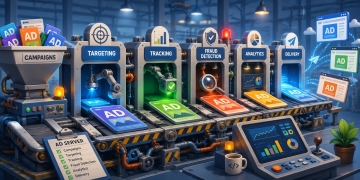
With AdServerX, I have had to stay grounded while working through feature planning, architecture, customer portal work, licensing, detection systems, analytics, and all the details that pile up around a real product. That kind of project can easily get mentally crowded. I have learned that staying focused is less about forcing intensity and more about reducing the number of things that can quietly pull me off course.
I Keep the Project Close, Even When I Am Not Actively Coding
One thing that helps me stay connected to a long project is keeping it mentally nearby. I do not mean obsessing over it every waking hour. I mean making it easy to get back into the work without having to rebuild the whole mental model each time I sit down. That is where my text files and notes come in.
I usually keep simple notes in text files, and I use tools like Obsidian and Sublime Text when I want to capture ideas quickly without interrupting momentum. I am not trying to build a beautiful productivity system. I just want a reliable place to drop the next task, a problem I noticed, or a feature idea that should wait until later. That keeps those thoughts from bouncing around in my head while I am trying to work.
This matters because too many ideas can hurt focus just as much as too few. When I am building something large, it is easy to see 5 future improvements while I am still working on 1 current feature. If I try to hold all of that in my head, the project starts to feel wider than it needs to be. Writing it down gives each idea a place to live without letting it hijack the work in front of me.
I also try to leave myself a clean trail when I stop for the night. That might be a note about what I was fixing, what still needs checked, or what I want to build next. It sounds small, but it cuts down the friction when I come back later, especially on nights when I am tired and do not want to spend 30 minutes figuring out where I left off.
I Build in the Kind of Environment That Helps Me Stay Locked In
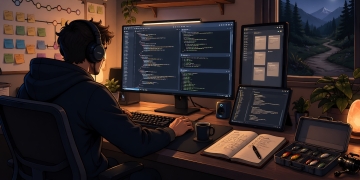
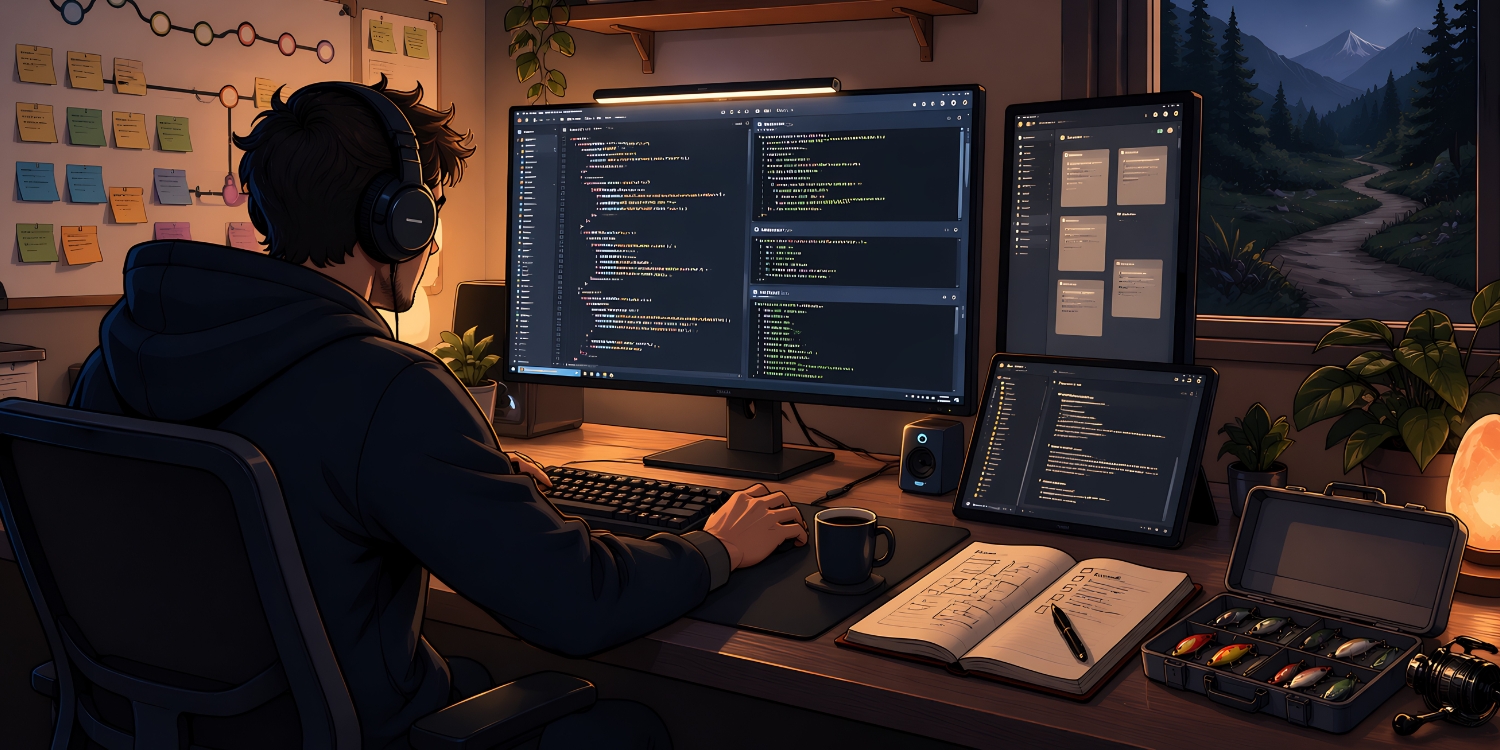
My best focus usually happens late at night. There is less noise, fewer interruptions, and less pressure to shift attention from one thing to another. That quiet makes it easier to stay inside the project long enough to do real work instead of shallow work. I have learned not to fight that rhythm just because it does not look like somebody else’s ideal schedule.
When I am in a good groove, I usually have music playing, SSH sessions open, and the tools I need right in front of me. VS Code is where a lot of the actual coding happens, while my notes stay close by so I can keep track of what I am thinking without breaking flow. I do not need a fancy setup to focus, but I do need one that feels familiar and friction free. Small annoyances add up fast when a project is already demanding a lot of mental energy.
That kind of environment helps me stay immersed. It reduces the number of tiny decisions that can pull me out of the work. I am not trying to think about where I put a note, which terminal tab matters, or what I meant by a half remembered idea from the night before. I want the project to feel ready for me the moment I sit down.
There is also something important about consistency here. Using the same tools and a similar setup over time creates a kind of mental entry point. My brain starts to recognize that this is work mode, this is the project, and this is where I pick the thread back up. When I have that, it takes less effort to get moving.
I Protect Myself From My Own Tendency to Overbuild Too Early
One of the biggest lessons I have learned is that overcomplicating a project can kill focus. I used to get pulled into building future layers before the foundation was even settled. On paper it felt smart because I was planning ahead. In practice it made the project heavier, slower, and harder to maintain momentum on.
There is a certain kind of distraction that looks productive because it is still related to the project. That is the dangerous kind. You tell yourself you are helping the future of the system, but sometimes you are really just avoiding the plain work that needs done right now. I have had to learn the difference between designing responsibly and wandering off into complexity.
With a product like AdServerX, it is easy to think of 20 things you could add before the current part is fully proven. Better abstractions, edge case support, a more advanced workflow, a smarter structure for something that barely exists yet. Those thoughts are not useless, but they are often out of sequence. When I follow them too early, I trade progress for possibility.
What helps me now is returning to the basis of the project. I ask myself what has to exist for this feature to actually work. Not what would make it more impressive later, not what might be useful under 5 future scenarios, but what is required for the current version to function cleanly and correctly. That question keeps me from turning every task into a fork in the road.
When I stay there, my focus improves because the work becomes concrete again. I am no longer trying to solve the final version of the project in a single pass. I am building the next real piece of it, and that is much easier to stay mentally connected to over time.
I Take Breaks Before Burnout Turns Into Avoidance
When I start getting mentally tired, I do not always need more discipline. A lot of times I need distance. That is a hard lesson for people who care deeply about their work, because stepping away can feel like losing momentum. I have learned that sometimes the best way to protect momentum is to stop before I hit the wall.
That break does not have to be complicated. Sometimes it is a walk. Sometimes it is a nap. Sometimes it is going fishing or doing anything that gets my mind off the project long enough for the mental pressure to release. I have come back from short breaks with answers that did not show up when I was staring directly at the problem.
This is especially important on long term projects because burnout rarely announces itself in a dramatic way at first. It often shows up as irritability, mental fog, indecision, or the urge to avoid opening the project at all. If I ignore that and keep forcing myself forward, I stop doing my best thinking. Then the work takes longer, and I start associating the project with exhaustion instead of progress.
I try to watch for that shift early. The moment I notice that I am rereading the same lines, second guessing basic decisions, or getting pulled toward random side tasks, I know my focus is slipping. Taking a little time away is not me giving up on the work. It is me trying to come back to it with a clearer mind and a better chance of doing it well.
I Use Small Wins to Keep Big Projects From Feeling Endless
One problem with long term projects is that they can start to feel like they never end. When that happens, it gets harder to measure progress in a way that feels encouraging. You can work for hours and still feel like the finish line barely moved. That feeling can wear a person down if they are not careful.
I deal with that by paying attention to smaller completions inside the larger build. A feature is working. A bug is finally resolved. A workflow feels clean now. A rough section of code is easier to understand than it was yesterday. Those things matter because they remind me that the project is moving, even when the whole thing is still far from done.
This is one reason I like keeping notes in plain text. I can see what I finished, what changed, and what still needs attention without turning the whole process into overhead. I do not need a complicated dashboard to know I made progress. I just need enough evidence to keep my mind from falsely telling me that nothing is happening.
That kind of tracking also helps when a project hits a slow stretch. Every serious build has those. There are times when the work becomes less visible and more structural, and the outside result does not look very different day to day. Being able to point to completed pieces helps me stay steady during those stretches instead of feeling like I am stuck.
I have found that focus improves when progress is visible. Not fake progress, not busywork, but real movement. When I can see that the project is becoming more complete, it is easier to keep showing up for it without feeling drained by the size of what remains.
I Accept That Life Is Part of the Project, Not Separate From It
A lot of advice about focus acts like work happens inside a sealed room where nothing interrupts it. Real life does not work that way. Fatigue is real. Responsibilities are real. Mental overload is real. If I pretend those things are not part of the process, I end up blaming myself for conditions that were always going to exist.
What has helped me is learning how to work with my real energy instead of my imagined ideal energy. Some days are good for deep technical work. Some are better for planning, cleanup, reviewing notes, or solving smaller problems. That does not mean I am lowering standards. It means I am trying to match the work to the version of me that showed up that day.
This keeps long term projects alive through uneven seasons. If the only acceptable day is a perfect day, progress becomes fragile. I would rather have a system that still moves when life is messy than one that only works when everything is quiet and easy. Most meaningful projects are built in the middle of real life, not outside it.
That mindset has helped me stay with AdServerX over the long haul. Big product work asks for consistency more than constant intensity. There are seasons where I can push hard and make major gains. There are others where the win is simply keeping the thread unbroken and continuing to move forward without burning myself out.
I Stay Focused by Remembering What the Project Is Supposed to Be
When a project gets long, it can lose clarity if I am not careful. Features pile up, side ideas keep coming, and the original purpose can start getting buried under layers of activity. When that happens, focus becomes harder because every task starts to feel equally important. That is rarely true.
I try to keep returning to what the project is supposed to be at its core. For me, that means remembering what problem I am solving, who the product is for, and what kind of result I actually want at the end. That keeps me from chasing every possible improvement just because I know how to build it. Knowing how to do something is not always a good enough reason to do it right now.
This kind of clarity also helps with burnout because it cuts down on wasted effort. There is nothing more draining than pouring energy into work that should have stayed on the idea list for later. When I know what belongs in the current stage of the project, I can give my attention to it with more confidence and less mental friction.
That has probably been one of the biggest differences between how I worked years ago and how I work now. I still care about quality, but I care more about sequence than I used to. The right feature at the wrong time can still become a distraction. Staying focused on a long term project often comes down to respecting the order of the build.
Final Thoughts
The older I get, the less I think focus is about pushing harder. For me, it is more about building a way of working that can survive fatigue, too many ideas, and the normal interruptions of life. Long term projects do not need a perfect version of me. They need a steady one.
What has helped me most is keeping the work close through notes, protecting the core of the project from unnecessary complexity, and stepping away before burnout turns into resistance. I have also learned to trust smaller wins and stop expecting every work session to feel powerful. A lot of real progress is quiet.
That is how I stay focused on something like AdServerX without letting it consume me. I try to stay clear on what matters now, keep a record of what is next, and give my mind room to recover when it needs it. That approach may not sound flashy, but it has helped me keep moving on projects that take real time to build.