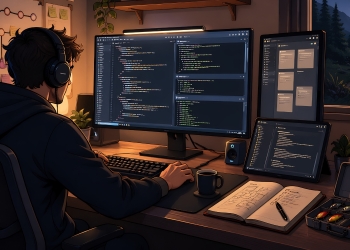












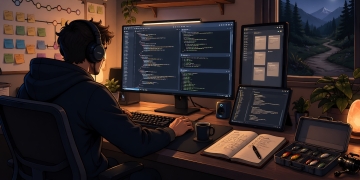







I started writing code over 35 years ago. Everything I learned came from figuring things out on my own, long before there were structured courses, video tutorials, or large communities sharing answers. If something didn’t work, I had to break it apart, test it, and rebuild it until it did. That process shaped how I think and how I solve problems to this day.
I never followed a traditional path into development. There was no classroom, no mentor sitting beside me, and no team to compare notes with. Every project I worked on was something I built alone, from start to finish. That independence taught me a lot, but it also created a blind spot that I didn’t recognize until much later.
Over the years, I built a lot of software. Some of it was simple, some of it was complex, and some of it solved real problems that I was dealing with at the time. I would work through the idea, design the system, write the code, and eventually reach a point where everything was working. From a technical standpoint, the project was done, but that is where things would stall.
Even after finishing a project, I would hesitate to release it. I would find reasons to hold back, usually telling myself it needed more work or that it was not quite ready. Most of the time, it was ready. What held me back was something I didn’t fully understand at the time. It was not a lack of skill or experience. It was imposter syndrome.
The Early Years: Learning Without a Roadmap
When I started learning to code, there was no clear path to follow. I did not have structured lessons, step by step guides, or a curriculum that told me what to learn next. Most of what I learned came from reading documentation, experimenting with code, and fixing things that broke along the way. Every solution I figured out came from trial and error.
Back then, information was not as easy to access as it is today. You could not just search for an error and get an answer in seconds. Sometimes it meant spending hours trying different approaches just to understand what was going wrong. That process forced me to slow down and really understand what the code was doing instead of just copying a solution.
I built my skills by solving real problems that I ran into. If I needed something, I wrote it. If I did not understand something, I kept working on it until I did. Over time, that built a strong foundation, but it also meant I never had a clear way to measure where I stood compared to other developers.
There was no feedback loop outside of whether the code worked or not. If it ran without errors and did what I expected, that was considered success. I did not have anyone reviewing my code, suggesting improvements, or pointing out better approaches. That lack of outside input shaped how I viewed my own work.
Looking back, I realized that I learned how to solve problems effectively, but I never learned how to evaluate my own level. I did not know what “good” code looked like compared to industry standards. That uncertainty stayed with me longer than I expected, even as my experience continued to grow.
Working Alone Changes How You See Yourself
Working alone became my normal very early on. Every project I built was something I designed, coded, tested, and maintained by myself. There was no second opinion, no back and forth discussion, and no shared responsibility for decisions. It gave me full control, but it also meant I had no external reference point.
After a while, your internal voice becomes the only feedback you hear. If something feels off, there is no one to challenge that thought or balance it out. You end up relying entirely on your own judgment, even when that judgment is overly critical. That can slowly change how you see your own work.
I did not have code reviews or team discussions to validate what I was doing. There was no one saying this approach makes sense or suggesting a cleaner way to handle something. Instead, I would revisit my own code repeatedly, trying to convince myself it was solid. That loop rarely led to confidence and usually led to more doubt.
Another thing that comes with working alone is not seeing how other developers actually work day to day. You do not see their mistakes, their shortcuts, or the parts of their code they are not proud of. All you see is your own work under a microscope, while everyone else becomes an assumed standard that you feel like you are not meeting. That comparison is not based on reality, but it still feels real.
Over time, this creates a mindset where nothing feels completely finished. Even when everything is working exactly as it should, it still feels like something is missing. Without external validation, it becomes difficult to trust your own results. That is where imposter syndrome starts to take hold without you even realizing it.
What Imposter Syndrome Looked Like for Me
For me, imposter syndrome did not show up as fear of writing code. I was comfortable building things and solving problems, and I knew how to work through complex systems when I needed to. The issue showed up at the end of a project, right when it was time to release it. That is where the hesitation would start.
After finishing a project, I would immediately start questioning it. I would go back through the code and pick it apart, focusing on details that most people would never notice. Instead of seeing a completed system, I saw a list of things that could still be improved. That made it hard to call anything finished.
There were projects that were fully functional and could have been useful to others, but I kept them to myself. I would tell myself they needed more features or a better structure before anyone else saw them. In reality, they were already in a state where they could have been released and improved over time. I just could not bring myself to take that step.
I also found myself rewriting parts of projects that were already working. Not because they were broken, but because I thought they were not good enough. That cycle repeated more than it should have, and it rarely led to anything significantly better. It just delayed progress and made it harder to move forward.
What made this difficult to recognize was that everything looked productive on the surface. I was still coding, still improving things, and still learning along the way. The problem was that nothing was leaving my environment and reaching real users. That gap between building and releasing is where imposter syndrome had the most impact.
The Perfection Trap
At some point, I convinced myself that everything needed to be as close to perfect as possible before it could be released. That standard was not something I could clearly define, but it was always there in the background. Every time I thought a project was ready, I would find something else to refine. That made “done” feel like something I could never quite reach.
I would go back through code that was already working and start cleaning it up again. Sometimes that meant renaming variables, restructuring functions, or changing how certain pieces interacted. None of those changes were critical, but they gave me a reason to delay releasing the project. It felt productive, even though it was holding things back.
The problem with chasing perfection is that the target keeps moving. As my skills improved, my expectations increased with them. What felt good enough a month ago no longer met the standard I had in my head. That created a cycle where I was always working toward something that kept shifting further away.
I also started focusing on how something was built more than what it actually did. If a project solved the problem it was meant to solve, that should have been enough to move forward. Instead, I focused on internal details that had little impact on the end user. That made it easier to justify not releasing anything.
Looking back, perfection was not the real goal. It was a way to avoid putting my work out where it could be judged. As long as a project stayed private, it could not be criticized or compared to anything else. The downside is that it also could not be used, improved through feedback, or turned into something bigger.
The Self-Taught Gap No One Talks About
Being self taught gave me a lot of freedom, but it also left some gaps that I did not notice at first. I learned how to build things, but I did not learn how my work compared to others in the field. There was no baseline to measure against and no consistent feedback to help calibrate my expectations. That made it difficult to know where I actually stood.
I did not have exposure to how other developers structured their projects or how they approached similar problems. Everything I built came from my own way of thinking, which worked, but it also stayed isolated. Without seeing other real world codebases, it is easy to assume that everyone else is doing things better. That assumption sticks even when it is not accurate.
Another issue was not knowing what I did not know. When you are self taught, you fill in gaps as you go, but you may not realize there are areas you have not explored. That can lead to a constant feeling that something is missing, even if your current skill set is more than enough to build solid applications. It creates a sense of uncertainty that is hard to shake.
I also found myself assuming that developers working in teams had a higher level of knowledge than I did. I imagined that they had access to better practices, better standards, and better code overall. What I did not realize at the time is that many of them were learning as they went, just like I was. The difference was that they had visibility and collaboration, while I was working in isolation.
That gap between perception and reality played a big role in how I viewed my own work. Even with years of experience, it was easy to feel like I was behind or missing something important. In reality, I had built a strong foundation through experience, but I had no way to validate it. That lack of validation fed directly into the hesitation to release anything publicly.
Comparing Against an Invisible Standard
One of the biggest issues I ran into was comparing my work against a standard that I could not clearly define. I had an idea in my head of what “professional” code should look like, but that idea was based on assumptions more than real examples. I imagined other developers writing cleaner, more efficient, and more structured code than I was. That comparison was not grounded in anything I could actually verify.
I would think about developers working at large companies or contributing to major projects and assume their work was on a completely different level. Without seeing their day to day code, it was easy to believe that everything they produced was polished and well thought out. That created a gap between what I thought they were doing and what I believed I was doing. The reality is not nearly that clean.
Most production code is not perfect. It evolves over time, it gets patched, and it often reflects the pressure of deadlines and changing requirements. There are trade offs being made constantly, and not every decision is ideal. That is something you do not fully see until you are exposed to real world systems.
Because I did not have that exposure early on, I filled in the gaps with assumptions. Those assumptions made my own work feel like it was falling short, even when it was doing exactly what it needed to do. I was comparing something real against something imagined, and that comparison was never going to be fair.
Once I started recognizing that, it changed how I looked at my own projects. I began to understand that working code that solves a problem has value, even if it is not perfect. The standard I had been measuring against was not realistic, and it was holding me back more than it was helping me improve.
How This Affected My Work
This mindset had a real impact on the work I was doing. I was not struggling to build things or solve problems, but I was struggling to move projects across the finish line. From the outside, it probably looked like steady progress, but internally there was always hesitation. That hesitation slowed everything down more than I realized at the time.
Some projects were in a state where they could have been released and improved over time, but instead they stayed local. I kept refining them, adjusting things that did not need to be adjusted, and holding them back from real use. Because of that, they never had a chance to grow beyond what I imagined they could be. Without users, there was no feedback, and without feedback, there was no real direction for improvement.
It also led to missed opportunities. A few of those projects could have turned into something useful or even something bigger if they had been released earlier. Instead, they remained unfinished in a practical sense, even though they were technically complete. That gap between finished and released is where most of the value was lost.
Another effect was that my work stayed invisible. I was gaining experience and building systems, but none of that was visible to anyone else. That made it harder to build confidence, because there was no external validation to balance out the internal doubt. It became a cycle where lack of visibility reinforced the same hesitation that caused it.
Eventually, I started to realize that the real issue was not the quality of the work. It was the decision not to release it. The longer that pattern continued, the more normal it felt, and the harder it became to break out of it.
The Turning Point
At some point, I started to notice a pattern that I could not ignore. I had projects that were complete, working exactly as intended, and still sitting unused. It was not a one time thing, it had happened multiple times over the years. That made it harder to justify as just being careful or thorough.
I began looking at other software that was being released and used every day. A lot of it was not perfect, and some of it had obvious issues that could have been improved. Even with those flaws, it was still out there solving problems and being used by real people. That made me question why I was holding my own work back.
The more I paid attention, the more I realized that releasing something did not mean it had to be finished in the way I had been thinking. Most software grows over time through updates, feedback, and real usage. It is not built in isolation and then released as a final version. That idea shifted how I looked at my own projects.
I also started to understand that my hesitation was not about the code itself. It was about how I thought it would be judged once it was out in the open. Keeping everything private removed that risk, but it also removed any chance for the project to become something more. That trade off was not worth it anymore.
Once I recognized that pattern, it became clear that the issue was not technical. It was a mindset that had been built over years of working alone. Realizing that did not fix it overnight, but it gave me something concrete to work on instead of just a vague feeling that something was off.
What Helped Me Push Through It
One of the first things that helped me was making the decision to ship something even when it did not feel completely ready. That went against how I had been working for years, but I knew the old approach was not getting me anywhere. I had to accept that waiting for the right moment would keep me stuck in the same cycle. Releasing something became more important than perfecting it.
I started separating the idea of something working from the idea of something being perfect. If a project did what it was supposed to do and solved the problem it was built for, that was enough to move forward. That shift alone removed a lot of pressure from the process. It allowed me to focus on function instead of chasing small improvements that did not really matter.
Another thing that helped was getting real feedback instead of relying on my own assumptions. Once something is out in the open, people interact with it in ways you did not expect. Some things work better than you thought, and other things need improvement. That kind of feedback is more useful than anything you come up with on your own.
I also started treating projects as something that would evolve over time instead of something that had to be finished before release. Version 1 did not need to be the final version. It just needed to exist and be usable. That mindset made it easier to move forward without feeling like everything had to be locked in from the start.
Over time, this approach helped build confidence in a different way. Instead of trying to convince myself that something was good enough, I could see how it performed in real use. That removed a lot of the guesswork and replaced it with actual results. It also made the process more practical and less driven by doubt.
A Realization Most Developers Never Say Out Loud
One thing I came to understand is that this is not a rare problem. A lot of developers deal with the same thoughts, even if they do not talk about it. From the outside, it can look like everyone else is confident and certain about their work. In reality, many of them are questioning themselves just as much.
Experience does not automatically remove that feeling. You can have years of work behind you and still wonder if what you are building is good enough. Skill and confidence do not always grow at the same pace. That gap can stick around longer than expected.
I also realized that many developers are better at pushing through that doubt than eliminating it. They still feel it, but they release their work anyway. That difference matters more than I thought. It is not about being completely confident, it is about not letting doubt stop progress.
Another thing that stood out to me is that people rarely share the unfinished parts of their process. You usually only see the final result, not the iterations, mistakes, or shortcuts along the way. That creates the impression that everything was done cleanly from the start. It sets an expectation that does not match reality.
Once I started seeing that more clearly, it made it easier to put my own work into perspective. I was not behind or missing something critical. I was dealing with the same internal pressure that many others deal with, just without realizing it. That understanding helped take some of the weight off of it.
Advice for Other Self-Taught Developers
If you are self taught and working alone, it is easy to fall into the same patterns I did. You spend a lot of time building and improving things, but you hesitate when it comes time to release them. That hesitation can feel like you are being careful or responsible, but it often goes deeper than that. It usually comes from how you see your own work.
You do not need permission to release something you built. There is no checkpoint where someone tells you that you are ready. If your project works and solves a problem, it already has value. Waiting for it to meet some undefined standard will only slow you down.
It also helps to understand that most software improves after it is released, not before. Real usage reveals things you will not catch on your own. Trying to anticipate everything ahead of time is not realistic. Letting people use what you built is part of the process.
Do not assume that other developers have everything figured out. Many of them are learning as they go, just like you are. The difference is that they are putting their work out there and adjusting based on what they learn. That visibility makes a bigger difference than perfection.
Your experience matters, even if it was built outside of a traditional path. Solving real problems over time builds a strong skill set, whether you had a team around you or not. You may already be further along than you think. The only way to really test that is to release something and see how it performs in the real world.
If You’ve Been Sitting on a Finished Project
If you have a project that is finished but still sitting on your system, I understand exactly where you are. It is easy to keep telling yourself that it needs more work or that it is not quite ready yet. That reasoning feels valid in the moment, but it can keep you stuck longer than you expect. At some point, you have to question whether those improvements are actually necessary.
A working project already has value, even if it is not perfect. Someone else might be able to use it as it is right now, or at least benefit from what you have built. Keeping it private removes that possibility completely. It also removes any chance of getting real feedback that could help you improve it.
There is also something important about seeing your work in use. It changes how you think about what you built and gives you a clearer sense of what actually matters. Some things you worried about will not matter at all, while other things will stand out more than expected. You cannot get that perspective without releasing it.
Waiting does not automatically make a project better. It often just delays the moment where it can start improving through real use. The longer something sits, the easier it becomes to leave it there. Breaking that pattern requires making a decision to move forward even if it feels uncomfortable.
If you are in that position right now, it might be time to release it as it is. Not because it is perfect, but because it works. You can always improve it later, but you cannot improve something that never gets used.
What I Do Differently Now
I still care about the quality of what I build, but I approach it differently now. Instead of trying to make everything perfect before release, I focus on getting it to a point where it works well and solves the problem it was built for. That shift has made it easier to move projects forward without getting stuck in the same loop. It has also made the process more practical and less driven by doubt.
I no longer treat the first version as something final. It is just the starting point. Once something is released, I can improve it based on how it is actually used instead of guessing what might need to change. That has led to better decisions and more meaningful improvements over time.
I also trust my experience more than I used to. After years of building and solving problems, there is a level of understanding that comes from doing the work repeatedly. That does not mean I stop learning or improving, but it does mean I do not question every decision the same way I once did. That alone has made a noticeable difference.
Another change is that I am more willing to let things be seen before they feel completely finished. That was something I avoided for a long time, but it has turned out to be one of the most important shifts I have made. Letting people interact with what I build has added a level of clarity that I could not get on my own. It has also made the work feel more real.
This is still something I stay aware of, because it does not completely go away. The difference now is that it does not control whether something gets released. I move forward, put the work out there, and improve it as I go. That approach has made a bigger impact than anything I was doing before.